Café Touba
Coffee involves fermentation. The beans can be fermented using wet, natural dry or semidry methods. The purpose of fermentation in coffee production is to remove the outside bean layers, which reveals two dried seeds. Fermentation will also affect the final flavour.
Café Touba is a spiced coffee from Senegal, which includes the spice ‘djar’ also known as grains of Selim, or Guinea pepper, and cloves. Café Touba has huge cultural significance in Senegal. Sheikh Amadou Bamba Mbacké introduced Café Touba to Senegal in 1902.
Sheikh Amadou Bamba Mbacké was a Sufi scholar and founder of the Mouride Brotherhood. During French colonial rule he was exiled for 32 years due to the influence of his anti-colonial, non-violent resistance movement across Senegal. Sheikh Amadou Bamba Mbacké also led land sovereignty projects across the country with the goal of the indigenous population gaining economic independence from French rule. Café Touba is named after Touba, the spiritual home of the Mouride Brotherhood in Senegal.
On his return from exile, Sheikh Amadou Bamba Mbacké brought Café Touba to Senegal as an aid to concentration during prayer and for medicinal purposes. The drink became synonymous with resistance to French oppression.
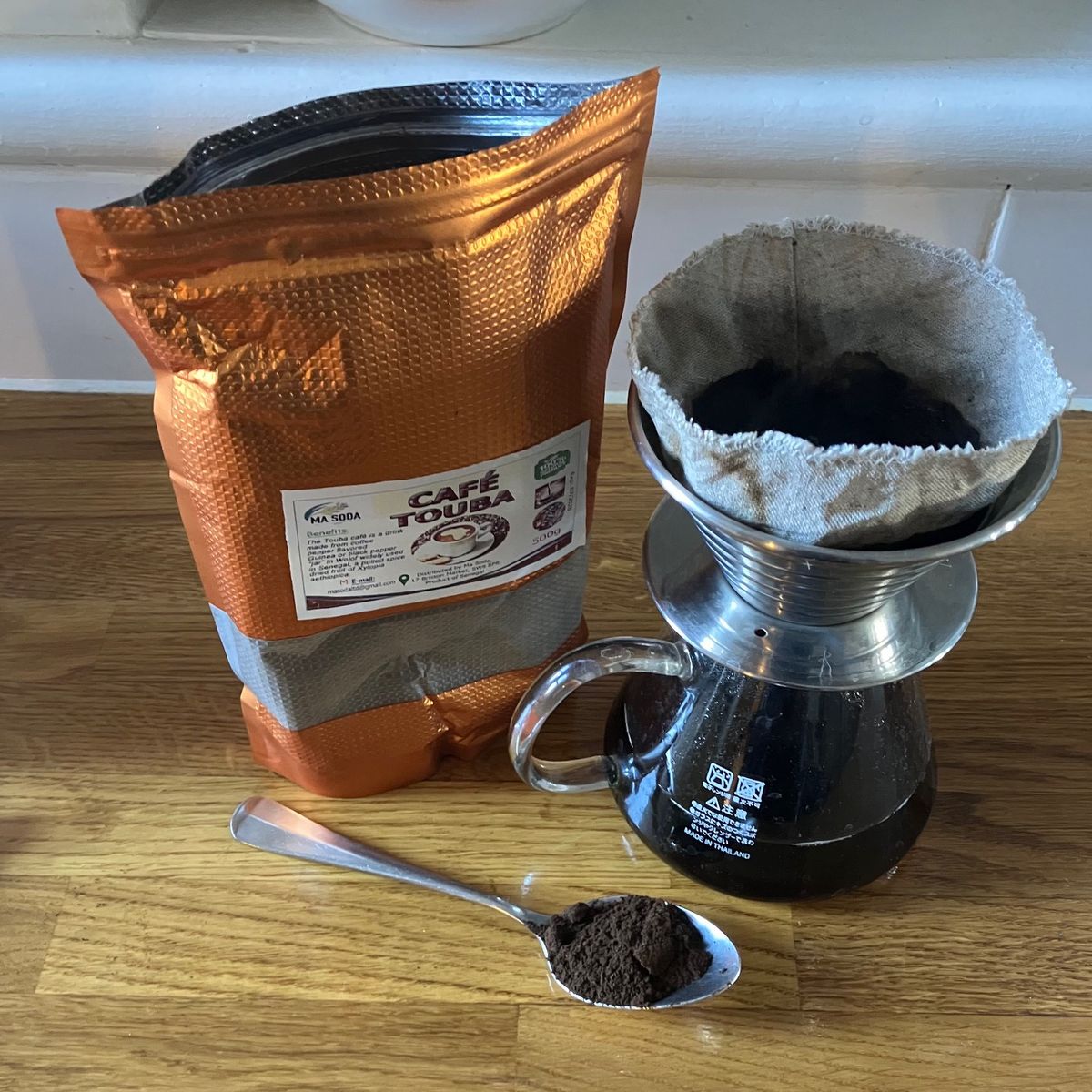
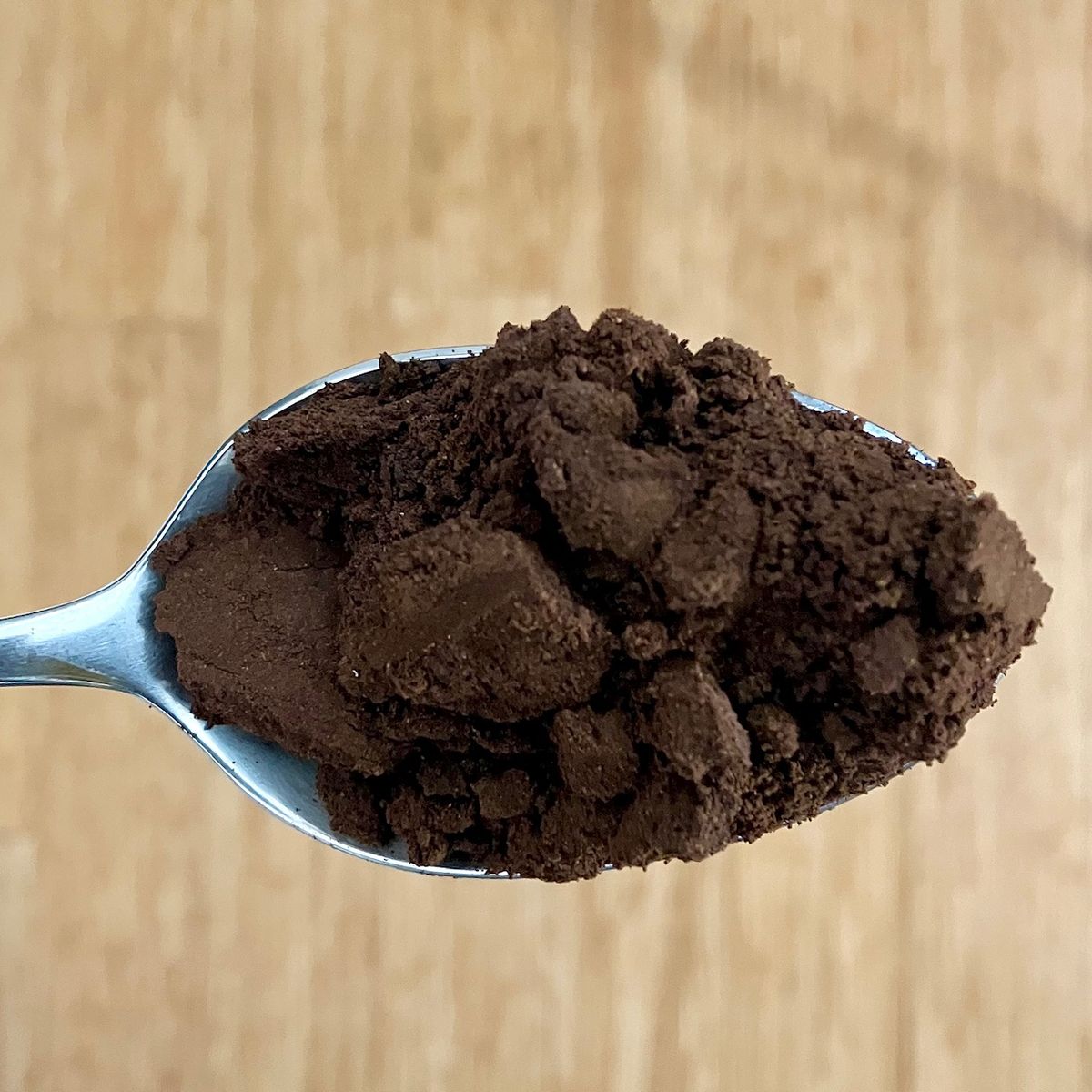
We bought our Café Touba from Ma Soda in Brixton as a ready blended ground coffee. Traditionally, you would grind the beans and mix in the spices and sugar. Then add water and heat until the sugar dissolves, and the distinctive aroma arises. Use a filter to strain the coffee, pour between two cups several times to create a froth. Café Touba has a distinctive flavour, unlike any other coffee you will have tasted.